




 Bishop Hill
 Caspar and the Jesus paper
Aug 11, 2008 Climate: MWP Climate: Mann Climate: McIntyre There has been the most extraordinary series of postings at Climate Audit over the last week. As is usual at CA, there is a heavy mathematics burden for the casual reader, which, with a bit of research I think I can now just about follow. The story is a remarkable indictment of the corruption and cyncism that is rife among climate scientists, and I'm going to try to tell it in layman's language so that the average blog reader can understand it. As far as I know it's the first time the whole story has been set out in a single posting. It's a long tale - and the longest posting I think I've ever written and piecing it together from the individual CA postings has been a long, hard but fascinating struggle. You may want to get a long drink before starting, and those who suffer from heart disorders may wish to take their beta blockers first.
 At some time or another, most people will have seen the hockey stick - the iconic graph which purports to show that after centuries of stable temperatures, the second half of the twentieth century saw a sudden and unprecedented warming of the globe. This was caused, we were told, by mankind burning fossil fuels and releasing carbon dioxide into the atmosphere. For a while, the hockey stick was everywhere - unimpeachable evidence that mankind was damaging the planet - an impact that would require drastic measures to reverse.
 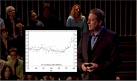 The stick's most famous outing however was just a couple of years ago when it made a headlining appearance in Al Gore's drama-documentary, An Inconvenient Truth. The revelation of the long, thin graph with its dramatic temperature rise in the last few decades, and the audience gasps that accompanied it, is something of a key moment for many environmentalists.
Shortly after its publication, the hockey stick and its main author, Michael Mann, came under attack from Steve McIntyre, a retired statistician from Canada. In a series of scientific papers and later on his blog, Climate Audit, McIntyre took issue with the novel statistical procedures used by the hockey stick's authors. He was able to demonstrate that the way they had extracted the temperature signal from the tree ring records was biased so as to choose hockey-stick shaped graphs in preference to other shapes, and criticised Mann for not publishing the cross validation R2, a statistical measure of how well the temperature reconstruction correlated with actual temperature records. He also showed that the appearance of the graph was due solely to the use of an estimate of historic temperatures based on tree rings from bristlecone pines, a species that was known to be problematic for this kind of reconstruction.
The controversy raged for several years, involving blue riband panels, innumerable blog postings, endless name-calling and dark insinuations about motivations and conflicts of interest. In May 2005, at the height of the controversy, and on the very day that McIntyre was making a rare public appearance in Washington to discuss his findings, two Mann associates, Caspar Amman and Eugene Wahl, issued a press release in which they claimed that they had submitted two manuscripts for publication, which together showed that they had replicated the hockey stick exactly, confirmed its statistical underpinnings and demonstrated that McIntyre's criticisms were baseless. This was trumpeted as independent confirmation of the hockey stick. A few eyebrows were raised at the dubious practice of using a press release to announce scientific findings. Some also noted that on the rare occasions that this kind of announcement is made, it tends to be about papers that have been published, or at least accepted for publication. To make such a dramatic announcement about the submission of a paper was unusual in the extreme.
 The first of these papers ("the GRL paper") was submitted to Geophysical Research Letters, the journal of the American Geophysical Union. It took the form of a rebuttal of a McIntyre paper that had attacked the hockey stick and had been published in the same journal. From the first, the McIntyre paper had been controversial. Apart from Amman and Wahl's paper, there were three other papers taking issue with it. However, it turned out that some of these attempted rebuttals were less well formed than others. In fairly short order, Amman and Wahl's paper was rejected, many of its criticisms either relating to other McIntyre papers than the one at hand, or relying on the second paper for their arguments. Since the second paper was unpublished, it was effectively impossible for McIntyre to defend himself against these criticisms. Shortly after Amman and Wahl's paper was rejected, another of the rebuttals, that of a physicist called David Ritson, was also shot down by the journal's editors.
Meanwhile the second, longer paper ("the CC paper") had started its long road to publication at the journal Climatic Change. This article purported to be a replication of the hockey stick and confirmation of its scientific correctness. However, in a surprising turn of events, the journal's editor, prominent global warming catastrophist Steven Schneider, mischievously asked none other than Steve McIntyre to be one of the paper's anonymous peer reviewers.
We have seen above that one of the chief criticisms of the hockey stick was the fact that its author, Michael Mann, had withheld the validation statistics so that it was impossible for anyone to gauge the reliability of the reconstruction. These validation statistics were to be key to the subsequent story. At the time of their press release Wahl and Amman had made public the computer code that they'd used in their papers. By the time their paper was submitted to Climatic Change, McIntyre had reconciled their work with his own so that he understood every difference. And he therefore now knew that Wahl and Amman's work suffered from exactly the same problem as the hockey stick itself: the R2 number was so low as to suggest that the hockey stick had no meaning at all, although another statistic, the reduction of error statistic (or RE) was relatively high. It was only this latter figure that had been mentioned in the paper. In other words, far from confirming the scientific integrity of the hockey stick, Wahl and Amman's work confirmed McIntyre's criticisms of it! McIntyre's first action as a peer reviewer was therefore to request from Wahl and Amman the verification statistics for their replication of the stick. Confirmation that the R2 was close to zero would strike a serious blow at Wahl and Amman's work.
 Caspar AmmanWahl and Amman's response was to refuse any access to the verification numbers, a clear flouting of the journal's rules. As a justification of this extraordinary action, they claimed that they had shown that McIntyre's criticisms had been rebutted in their forthcoming GRL paper, despite the fact that the paper had been rejected by the journal some days earlier. At the start of July, with his review of the CC paper complete, McIntyre took the opportunity to probe this point, by asking the journal to find out the anticipated publication date of the GRL paper. Wahl and Amman were forced to admit the rejection, but they declared that it was unjustified and that they would seek publication elsewhere.
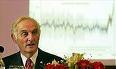 Sir John HoughtonWith the replication of the hockey stick in tatters, reasonable people might have expected some sort of pause in the political momentum. Seasoned observers of the climate scene, however, will be unsurprised to hear that global warming eminences grises like Sir John Houghton and Michael Mann continued to cite the Wahl and Amman papers despite the CC paper being in publishing limbo and the GRL paper being apparently dead and buried. The Wahl and Amman press release was not withdrawn either.
Events soon took another surprising turn., It was announced that the editor in chief of Geophysical Research Letters, Jay Famiglietti, had taken over the file for the McIntyre paper and its responses. This was justified he claimed, because of the high number of responses - four - that the McIntyre paper had received. That two of those responses had been rejected and were no longer in play was not mentioned. The reason for the change quickly became apparent though when, at the end of September, the rejected response from David Ritson turned out not only to have been re-submitted but had also been accepted for publication. This was another clear breach of the journal's rules, which required that an article's author should be able to comment on responses before they were accepted. Famiglietti however refused to make any on-the-record comments about why he behaved as he did.
 Jay Famiglietti
If McIntyre had any suspicions about the implications of Famiglietti's malfeasance, he must have been quite certain when, shortly afterwards, hockey stick author Michael Mann commented on his RealClimate blog that both the CC and the GRL papers were going to be accepted shortly. Sure enough, in the last week of September, the GRL paper was resubmitted and revisions were made to the CC paper. Both papers were back in play again.
As 2005 neared its end, two important events loomed large. The first was the year end deadline for submission of papers for the IPCC's Fourth Assessment Report on the state of the climate, and realisation soon dawned on McIntyre and the observers of the goings-on at GRL:

the IPCC needed to have the Wahl and Amman papers in the report so that they could continue to use the hockey stick, with its frightening and unprecedented uptick in temperatures. Mountains were going to be moved to keep the papers in play.
 The other important happening was the fall meeting of the American Geophysical Union, which would be attended by many of the big names in paleoclimate and at which both McIntyre and Amman would be making presentations. McIntyre's plan was to use the question and answer session after Amman's presentation to once again press for the R2 number for the hockey stick, a figure that had never been released, despite it being constantly requested over the previous years by McIntyre, journals, politicians and journalists. Sure enough, when confronted, Amman once again prevaricated.
After the session, McIntyre attempted to clear the air by inviting Amman to lunch. In the circumstances, this seems to have been a relatively amicable affair, but McIntyre's suggestion that he and Amman write a joint paper outlining where they agreed and where they differed was not taken up. When McIntyre later formalised this offer in an email, Amman failed even to acknowledge it.
While the AGU was meeting in San Francisco, Climate Change had provisionally accepted Wahl and Amman's CC paper, any objections which might have been raised by McIntyre swept aside by simple means of not inviting him to review the second draft. The resubmitted version of the paper turned out to be almost identical to the old one, except that a new section on the statistical treaments had been added, presumably as a condition of acceptance. And here there was an upside because, buried deep within the paper, Amman and Wahl had quietly revealed their verification R2 figures, which were, just as McIntyre had predicted, close to zero for most of the reconstruction, strongly suggesting that the hockey stick had little predictive power. Their decision to reveal these key data is necessarily obscure, but may well have been prompted by McIntyre's decision to file a complaint of academic misconduct about Amman with his employers, UCAR. Although the complaint was rejected, it may well have put sufficient pressure on Amman and the journal to show the numbers that everyone wanted to see.
The CC paper's provision acceptance date was December 12th, just a few days before the AR4 deadline. Strangely the version that was accepted seems to have been dated 24th Feb 2006, so according to its rules the IPCC shouldn't have been able to considered it. And what is more, it appears that the new sections discussing the statistical verifications were only added in this post year-end version. As McIntyre put it:
So under its own rules, is IPCC allowed to refer to Ammann and Wahl [2006]? Of course not. Will they? We all know the answer to that. When they refer to Ammann and Wahl [2006], will they also refer to its confirmation of our claims about MBH verification r2 statistics. Of course not. That information was not available to them in December. But wait a minute, if Ammann and Wahl was in press in December, wouldn’t that information have been available to them? Silly me.
In other words, the version of the paper which had gone forward to the IPCC didn't include the adverse verification statistics, but the version accepted by the journal did. The IPCC got their rebuttal of McIntyre and the journal got a fig leaf of respectability to cover up its duplicity.
By March, the CC paper had been fully accepted, but there was to be another hiccup that would threaten its existence. After all the shenanigans at GRL with the replacement of the editor and the resubmission of letters, the journal decided once again to reject Wahl and Amman's attempt to rebut McIntyre's work. Ostensibly this was because the arguments were "already out there", but the truth was surely that there were so many holes in the statistical arguments as to make their publishing an embarrassment to the journal.
This new rejection was a problem for the CC paper, as I will explain below. When using an R2 verification, researchers can refer to tables of benchmarks to gauge the significance of their results. Now that the fact that the hockey stick and Amman and Wahl's replication of it were public, Amman was arguing that the correct measure of significance was in fact the alternative RE statistic. His problem was that for RE statistics, there are no tables of benchmarks for the researcher to refer to - he has to establish a benchmark of his own by other means. And Amman had done this in the GRL paper which had just been rejected. Without the GRL paper, he couldn't even argue that his results in CC were statistically significant.
There is a rule of thumb for RE statistics: this says that positive RE numbers have some significance while negative ones do not. Unfortunately for Amman, this rule applies only to linear regressions; as the hockey stick was clearly not linear, it couldn't apply. The original hockey stick authors had claimed that they had created a benchmark through other means, and that the figure was still zero. Now, while they had been silent on the issue in their original GRL submission, Amman and Wahl announced in their resubmission that they had performed benchmarking calculations and that had confirmed that the significance level for the RE should remain at zero.
However, now that the resubmission had been rejected by GRL, the "establishment" of this benchmark was cancelled out, and the statistical arguments in the CC paper which relied on it could no longer be maintained.
And then silence. A year later, the CC paper was nowhere to be seen, despite having been accepted for publication. It was stuck in a kind of publishing limbo once again. This left the IPCC and Climatic Change with a problem. McIntyre observed:
I’m intrigued as to what the final Wahl and Ammann version will look like. They have an intriguing choice: the inclusion of a reference to this article in AR4 was premised on their article being “in press” which would prohibit them from re-working their article to deal with the GRL rejection. But the article needs to be re-worked since it will look pretty silly to describe their GRL article as “under review” over 18 months after it has been rejected.
In the background, howevrer, much had been happening. Suddenly in September 2007, and with the IPCC report published, the CC paper suddenly appeared, preceded in the same journal by another paper by the same authors. What had happened was that Wahl and Amman were quietly allowed to rewrite their rejected GRL paper and submit it to Climatic Change instead. All reference to the rejected GRL paper in the CC paper could be replaced by reference to the new paper, (which I will call the Jesus paper, in light of its extraordinary resurrection and for lack of any less confusing name). With identical authorship, and a maze of cross-references between them, the two CC papers were carefully designed to make understanding how their arguments relied on each other as difficult as possible.
The beauty of this approach was that it allowed for retention of the original acceptance date for the CC paper, and hence its inclusion in the IPCC process. It did leave them with the embarrassing problem that a paper that was allegedly accepted in March 2006 relied upon another paper that even the journal itself said was only received until August (and in reality, is was even later than that) Readers should note that this matters because unless the paper was accepted by the journal by the deadline, it should not have been accepted by IPCC for inclusion in the Fourth Assessment Report. But the IPCC needed the CC paper and despite the inconsistency being pointed out to them, the IPCC they waved the objections aside as irrelevant.
The CC paper argument leads from the text, to the appendix and then onto the Jesus paper. At places in the Jesus paper the argument referred back to the CC paper creating a neat, if logically flawed, circular argument. One notable feature of the CC paper and the Jesus paper was that they relegated some of their key argumentation to their Supplementary Information (SI) sections, online appendices to the published papers. In particular, the Jesus paper stated that the statistical discussions and more precisely, the establishment of RE benchmarks could be seen there. To have key arguments in the SI was most unusual and it quickly became apparent why it had been done: the SI was nowhere to be seen. Even the peer reviewers appear not to have had access, and once again, Amman refused McIntyre's request for the data and code. His reply to this request was startling (and remember that Amman is a public servant):
Under such circumstances, why would I even bother answering your questions, isn’t that just lost time?
Again, everything fell silent. For the next year nothing more was heard of the two papers. McIntyre pressed from his blog for release of the SI and the politicians were able to quietly take advantage of the political space created by the IPCC report. Then, just a few weeks ago, and entirely unannounced, Wahl and Amman's Supplementary Information suddenly appeared on Caspar Amman's website, some three years after that first press release announcing the refutation of McIntyre's work. With it, and a godsend to McIntyre, was the code used to establish the benchmark for the RE statistic. With no more than a few days work, McIntyre was able to establish exactly what had been done.
You will remember that Amman and Wahl had claimed that they had established a benchmark of zero for a 99% significant RE score - that is to say, there is only a 1% chance that you might have got that score by chance. McIntyre had, much earlier, shown that if you ran red noise through the process, you could get RE scores of more than 0.5. (Red noise is best described as a "random walk" - a line which wiggles at random, but is not entirely random like white noise.) To reduce your chance of random error to 1% you actually needed to score 0.54 for RE. How Amman had come up with zero as his benchmark was a mystery.
Now, with the code in front of him, McIntyre could see exactly what Wahl and Amman had done. And what they had done was to calculate almost exactly the same figure as he had! The number they had arrived at was 0.52, just a whisker away from McIntyre's own 0.54, but they had reported to the world that it was sufficient only to score a positive number! Of course, this wasn't picked up by the peer reviewers because, as we've seen, they didn't have access to the Supplementary Information, but the IPCC's purposes had been served - the hockey stick found its way intact into the Fourth Assessment Report, unscathed by skirmishes with inconvenient statistical truths.
However, the figure of 0.52 was insufficient for W&A's purposes. Their problem was that the key component of the hockey stick had a verification RE of 0.48, leaving it tantalisingly just below the calculated benchmark. They needed it to be in the top rank and getting it there was going to be tricky. For each simulation, a thousand runs through the statistical sausage machine were perfomed and the RE number, the correlation with the temperature record, was recorded. Then all the runs were sorted in order of RE value, the best runs having the highest RE and the worst the lowest. W&A needed to show that the hockey stick RE was right up there with the best simulations - in the top one percent. While its RE was high, it wasn't good enough. And it was no good simply removing runs which had a higher score than the hockey stick, since this would not increase its position enough - they would have been reducing the total number of runs as well as the number of runs which were scoring better than the hockey stick. To get the answer they needed, the higher scoring runs had to be made to be lower than the hockey stick, but left in the calculation.
To do this, Wahl and Amman came up with a value which they called a calibration/verification RE ratio. As the name suggests, this was the ratio of the two RE numbers for calibration and verification. This ratio is however, entirely unknown to statistics, or to any other branch of science. But it was not plucked out of the air. The ratio and the threshold value which was set for it by Wahl and Amman was carefully calculated. They argued that any run with a ratio less than 0.75 should be assigned a score of -9999. Since the hockey stick had a score of 0.813, 0.75 was pretty much the highest level you could go to without rejecting the hockey stick itself. However if you set your ratio threshold too low, not enough runs would be rejected and the hockey stick would no longer be "99% significant". Some of the results of this ratio were entirely perverse - it was possible for a run that had scored a reasonably good RE in the calibration (there was a good correlation between it and the actual temperatures) to be thrown out of the final assessment on the grounds that it had done very well in the verification - the correlation with actual temperatures was considered too good!
With this new, and pretty much entirely arbitrary hurdle in place, Wahl and Amman were able to reject several of the runs which stood between the hockey stick and what they saw as its rightful place as the gold standard for climate reconstructions. That the statistical foundations on which they had built this paleoclimate castle were a swamp of misrepresentation, deceit and malfeasance was, to Wahl and Amman, an irrelevance. For political and public consumption, the hockey stick still lived, ready to guide political decision-making for years to come.
12 Aug: Minor updates for typos etc. Also, I think I'm right in saying that the correct usage in UK English is "blue riband", not "blue ribbon", or that they are at least valid alternatives. Apologies to my North American readers. :-)Dissenting opinions welcome in the comments.
4 Sept. It was pointed out that I've used the term "CC paper" before defining it. I've changed the relevant paragraph to read "second paper".

Reader Comments (136)
I found your site on technorati and read a few of your other articles. Keep up the good work. I just added your RSS feed to my Google News Reader. Looking forward to reading more from you. Cheers, Reborn Babies.
Nobody can torture data like a Warmonger trying to keep his gravy train of funds & fame rolling on.
typo
In the background, *** howevrer, *** much had been happening. Suddenly in September 2007, and with the IPCC report published,
jvp
Something like this needs to be sent both in hard copy and soft copy to every major media rag in print in North America but in a dumbed down version so their readership can understand they've been hood winked into being sheep waiting to be fleased by A Gore and his friends on this topic...
Hell of a good article. I have never trusted IPCC or the AGW State-Paid Scientists.
My theory has been and shall remain Planetary Alignment and Solar Activity produces the fluctuating temperatures on Earth, not Man.
But, this was a scam to begin with the perpetrators of AGW knew they had about a 15 year window to pull this off, especially since the global temps are going down. Al Gore was suppose to win, and while he was President would have passed AGW Legislation and then Bada Bing Bada Boom come 2008 the last year of his Presidency could have claimed their efforts to thwart Global Warming were successful, and Man oh Man, fleecing the American Public would know no bounds then.
An excellent trace of the manipulation of science around a pre-determined ouput. In my opinion though you have only scratched the surface. The other side of the hockey stick is the CO2 part, purporting to show that temperature has gone up in lock step with CO2, and both of these are at “record” highs since records began. Your information looks at the temperature side. To see how the CO2 side has also been manipulated to fit in with this please look at http://www.21stcenturysciencetech.com/Articles%202007/20_1-2_CO2_Scandal.pdf
So there was two parallel manipulations – and one would have to say they were both working together to achieve the desired result. How shameful that science can be manipulated in this way.
Alan
The phrase 'blue riband panels' should be 'blue ribbon panels'.
John
Actually they are alternate uses. Look it up in Wikipedia. This came out when the article was first written. I now take a perverse pride in only ever writing "blue riband". ;-)
I was pointed here by the WUWT article, and as a non-scientist had been praying for articles like these. Thank you so much!
I (thankfully) don't know enough about statistics to comment about the bulk of this, but I was astounded at the phrase "blue riband". I thought I was the only person in the world who was familiar with that form of it.
I personally think that they'll make films about Steve McIntyre ... the loan guy fighting the system who single handedly discovers the evil plot by the villains to take over the world. The only question is which climate "scientist" gets to hold the cat ... still you only live twice!
Bishop Hill:
There has appeared on the web a collection of files which appear to include more than a thousand internal emails from CRU. There are also reports that CRU have notified their staffs that they have been compromised. This email appears very pertinent to your post above:
From: "Wahl, Eugene R" <wahle@alfred.edu>
To: "Jonathan Overpeck" <jto@u.arizona.edu>
Subject: RE: Wahl & Ammann AND Ammann & Wahl papers
Date: Thu, 13 Sep 2007 18:34:11 -0400
Cc: "Eystein Jansen" <eystein.jansen@geo.uib.no>, <t.osborn@uea.ac.uk>, "Keith Briffa" <k.briffa@uea.ac.uk>
Hello Peck, Eystein, Tim, Keith:
Please find attached the e-versions of the WA and AW papers re: the
"hockey-stick". These are now available as "to-come-in-print" articles
from Climatic Change. I believe the WA one was just loaded yesterday.
As I understand it, official "print" publication will be this November.
These versions HAVE gone through the author proof process, and thus I
anticipate no possibility of them being further changed before print
publication.
Note brief correspondence yesterday with Phil Jones re: proof-level
changes that were made to WA (copied below).
Peace, Gene
Dr. Eugene R. Wahl
Assistant Professor of Environmental Studies
Division of Environmental Studies and Geology
Alfred University
One Saxon Drive
Alfred, NY 14802
607.871.2604
************************************************************************
*******
From: Wahl, Eugene R
Sent: Wednesday, September 12, 2007 6:44 PM
To: 'Phil Jones'; Caspar Ammann
Subject: RE: Wahl/Ammann
Hi Phil:
There were inevitably a few things that needed to be changed in the
final version of the WA paper, such as the reference to the GRL paper
that was not published (replaced by the AW paper here), two or three
additional pointers to the AW paper, changed references of a
Mann/Rutherford/Wahl/Ammann paper from 2005 to 2007, and a some other
very minor grammatical/structural things. I tried to keep all of this
to the barest minimum possible, while still providing a good reference
structure. I imagine that MM will make the biggest issue about the very
existence of the AW paper, and then the referencing of it in WA; but
that was simply something we could not do without, and indeed AW does a
good job of contextualizing the whole matter.
Steve Schneider seemed well satisfied with the entire matter, including
its intellectual defensibility (sp?) and I think his confidence is
warranted. That said, any other thoughts/musings you have are quite
welcome.
Peace, Gene
-----Original Message-----
From: Phil Jones [mailto:p.jones@uea.ac.uk]
Sent: Wednesday, September 12, 2007 11:30 AM
To: Wahl, Eugene R; Caspar Ammann
Subject: Wahl/Ammann
Gene/Caspar,
Good to see these two out. Wahl/Ammann doesn't appear to be in CC's
online first, but comes up if you search.
You likely know that McIntyre will check this one to make sure it
hasn't
changed since the IPCC close-off date July 2006!
Hard copies of the WG1 report from CUP have arrived here today.
Ammann/Wahl - try and change the Received date! Don't give those
skeptics something
to amuse themselves with.
Cheers
Phil
Attachment Converted: "c:\eudora\attach\Ammann_ClimChange2007.pdf"
Attachment Converted: "c:\eudora\attach\Wahl_ClimChange2007.pdf"
Thanks. I've posted on it.
Superb work. I wish you would use the term "Lazarus Paper" as a more respectful alternative to "Jesus Paper"; the 'back from the dead' element is preserved and the central event of Christianity is not associated in even a backhanded way with the unmitigated academic crookery and intellectual prostitution you so ably describe. Keep up the good work. This is the most illuminating outline I have come across of the technical gillimaufry concocted by the tenured little stalins of AGW catastrophism. A must read for the mathematically challenged such as I.
I agree with liamascorcaigh that Lazarus Paper is more appropriate than Jesus Paper. Good writeup for regular people like me to understand. Great work.
A quibble with your text: you write
Please note that AGU publishes a couple of dozen journals, or thereabouts, thus it would be better to write ...a journal of the American Geophysical Union.
It looks like the author posted a bunch of favorable responses to this post right after he wrote it. BTW none of the links work.
the questions i've never heard asked are:
if satellites can determine the earth's temperatures, can we determine the temperatures of other celestial beings within our planetary system? can we look at the temperature variations of said planets - and compare them to our planet?
if solar energy is the main culprit in our ecosystem, shouldn't the same effects be seen on other planets/ moons?
if a correlation can be drawn, doesn't AWG become debunked?
we need to think simply. the truth is usually the simplest explanation.
It's amazing McIntyre hasn't given up with all the run-around he gets from these guys.
Very insightful.
It may be useful for this information to be added to wiki's entry on the subject. The jist of your analysis seems to be missing from their entry. I wouldn't be surprised if there was resistance to this idea from the editors.
http://en.wikipedia.org/wiki/Hockey_stick_controversy
The CC paper's provision acceptance date was December 12th, just a few days before the AR4 deadline. Strangely the version that was accepted seems to have been dated 24th Feb 2006, so according to its rules the IPCC shouldn't have been able to considered it
should be - consider it or have considered it
What an excellent read. I don't mind admitting that much of this is over my head. But what is clear to anyone is the obfuscation and deceit and malpractice from these despicable fraudsters. I've just bought your book on Amazon - should get it in a couple of days. Can't wait!
Dear A.W.,
Thanks for publishing "Caspar and the Jesus paper", it is the most accessible explanation on the failure of the “Hockey Stick” I have read.
I have published a paragraph from in in the “Michael Mann says hockey stick should not have become 'climate change icon'” section of my page “Climate Change ("Global Warming"?)”, at http://www.oarval.org/ClimateChange.htm
I also have a Spanish translation at http://www.oarval.org/CambioClima.htm
I hope you will like it.
I am now reading “The Hockey Stick Illusion”, very good, deep enough to see the murky bottom of it. Thanks again.
Cheers!
Andres
Thank you - glad you enjoyed it. If you ever have a few spare days with nothing to do, let me know - I'm looking for someone to translate my report on the Climategate inquiries into Spanish!
Dear A.W.,
Being a webmaster I have no days with nothing to do, but I would be honored to translate your report.
Please send it over.
Best regards
Government should have more awareness towards R&D especially to private sector. They need help from the government. Anyway, visit my site at
www.centurytime.com.my
One: Hooray for 'Science', as done by hippies (who knowingly present that which is false, in order to support their ideological cause(s).)
Two: Peer-review has now been demonstrated to not work. So lets all treat 'self-correcting science' for what its worth: toilet paper, maybe. Yes, there is the WWW... but do consider how in the very face of cast-iron evidence of corruption, all its green-energy mandates still strangle the world. Free speech is rather meaningless, because the Third Way has enough socialism in it to render the voice of the people it rules irrelevant.
Science is dead. It has always been dead, it just wasn't quite public knowledge. But people like Eisenhower knew, didn't they, about the educational elites (hippies who want global socialism to save the world from human beings) driving public policy. (Along with the Idus-Mill complex, who also want the power inherent in global socialism to manage humanity like cattle, unfettered by oversight and all done in absolute secrecy.)
Thank you.
I am only part way reading, having followed a link from 'Smokey' Jan 9th 4.44pm, Two Opinions on the State of Science Publishing WUWT.
I now begin to read clearly the post-hoc mop-up-work that was conducted and the many other 'intricacies' developed by public servants and others, trusting in their status, but as actors in long careers, in a play of lies and pseudo-science.
Truly nauseating.
Thank you for writing of and bringing to the stage this story. The audience now recognising that the cast lives and acts early medieval behaviour and history. Yet receives modern wages & all the benefits modernity has to offer.
Mann has claimed that the Wahl/Ammann (“Jesus Paper”) was some kind of “independent” vindication of his work, yet it is clear that in 2006-07 Mann was including Wahl and Ammann in co-authorship on this work which Jean S links (see comment linked below).
So not only are Wahl & Ammann not “independent” of Mann in any plausible sense but they are getting the professional credit from Mann including them on another paper’s co-authorship in the same time period. For non-tenured scientists (as I believe both W. and A. were then) that is a big conflict of interest relative to a supposed "independent" assessment. They were crucially dependent upon Mann for the progress of their careers at that point.
Talk about ethically conflicted! It might be time for someone able to write up a critical review of the Mann-Wahl-Ammann and Schneider saga with new info. Not trying to add to Steve’s load, really, maybe someone at WUWT or BH could take this on….. it might get attention at Stanford in time for Gore’s talk in a few weeks.... putting a spotlight on Mann & company's misbehavior in time for the Stanford event might finally give these issues some needed traction. (I know, hope springs eternal....)
re Mann, Schneider, Wahl, and Ammann
Cartier watches bring back to the advanced and price-conscious consumer, this look and feel of these watches that are Swiss. Cartier watches are quality watches are self-winding made of materials that are high quality. They will have the feel and look of the rolex replica that are initial. They may be designed to resemble the authentic watches and just a really informed consumer might see which view is the original. These watches are marked with all the markings required to allow them to be an inexpensive replacement for the original Cartier watch.
reolica watches that will be discount today. As the community one wins within the style fundamentally, the true luxury watch benefits within the quality. Nevertheless, this watch has got the two characteristics.
You have shared an excellent post, thanks and keep up the good work
Its very well written; I love what youve got to say. But maybe you could a little more in the way of content so people could connect with it better.
Watch Game of Thrones Season 5 Episode Live Stream
Thanks for sharing such terriffic information. This article is so interesting that caught my attention. And I simply could not resist to leave a comment. Definitely I will be following your blog for more knowledge and information. read more
Very interesting and informative work.
Thank you.